
Aug 12, 2026
What Is AI Overview? Definition, Search Behavior, and Optimization Basics
TL;DR • Google's AI Overviews generate synthesized answers at the top of search results, drawing from multiple web sources via a retrieval-augmented generation pipeline.• Research shows AI Overviews reduce outbound organic clicks by roughly 39.8% on queries where they appear, with significant implications for publisher traffic.• Optimizing for citation in AI Overviews requires a different content strategy than classic SEO, one grounded in structure, authority, and source fidelity.
A randomized field experiment found that Google's AI Overviews reduce outbound organic clicks by approximately 39.8% on queries where the feature activates. That single figure reframes the stakes for any team managing search visibility. Google's AI Overview feature places a generative, multi-source summary directly above organic results, synthesizing web content through a retrieval-augmented generation pipeline rather than simply producing a search ranking of pages. This article explains how AI Overviews work, why they appear selectively, and what content and measurement strategies give your brand the best chance of being cited rather than displaced.
What Is AI Overview?
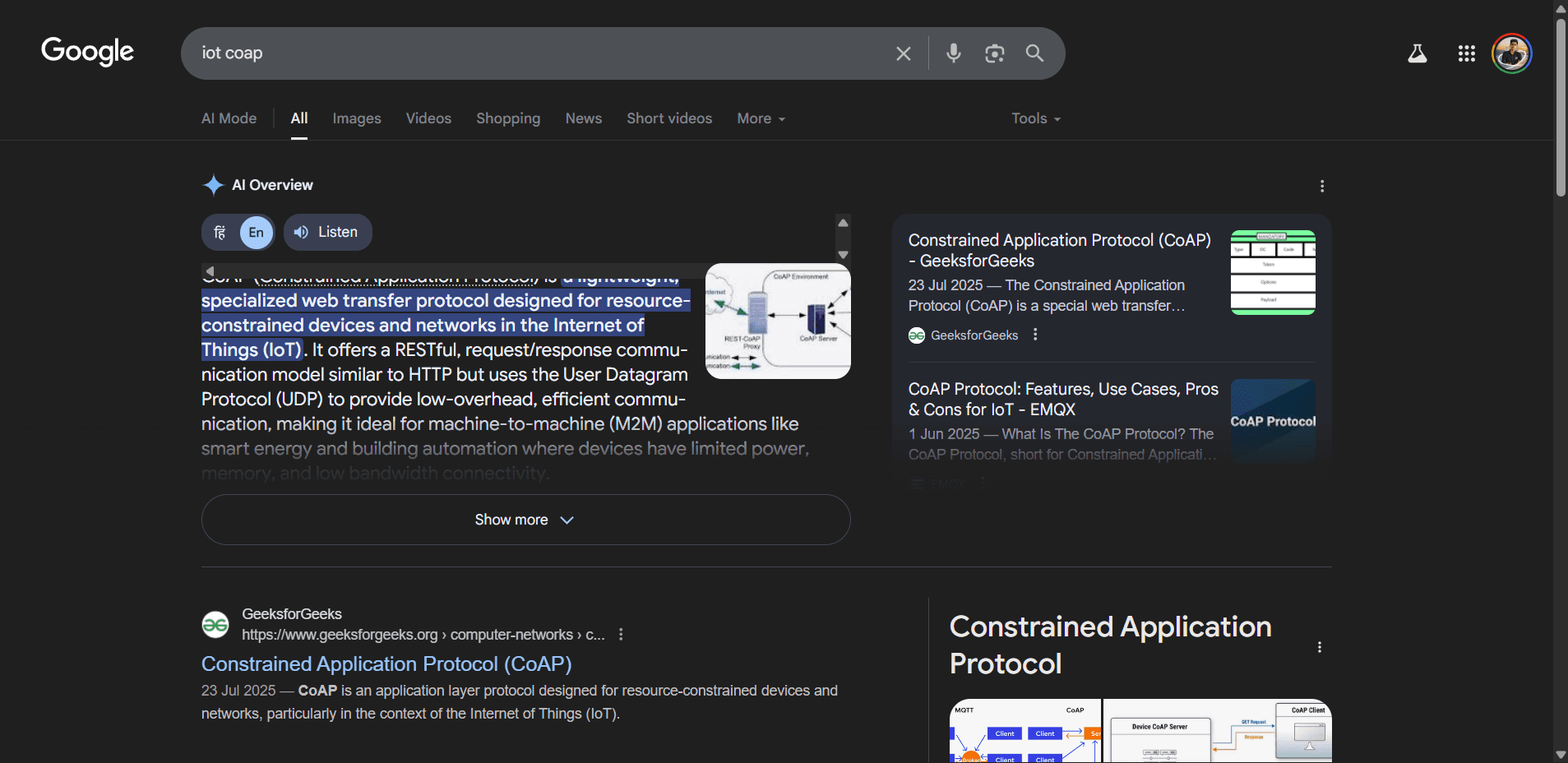
Google's AI Overview is an AI-generated summary box that appears at the top of select search result pages, synthesizing answers from multiple web sources before the first organic blue link. Unlike a featured snippet, which surfaces a single passage from one page, or a knowledge panel, which draws from structured data, an AI Overview assembles a multi-source synthesis through a retrieval-augmented generation pipeline, grounding its output in crawled and indexed content.
The feature traces back to Search Generative Experience (SGE), an opt-in experiment launched in Search Labs. Court filings in U.S. v. Google confirm the SGE branding gave way to the deployed AI Overviews product, integrated directly into the search engine with Gemini large language models handling inference. The deployment moved AI Overviews from experimental to default across major markets, making it a standard SERP element rather than a Labs toggle.
For publishers and marketing teams, this shift changes the visibility equation fundamentally: citation in an AI Overview now carries different implications than ranking in organic results. It is the same movement playing out across every generative engine, the shift from ranking to AI recommendations.
How Does AI Overview Work in Search Results?
At its core, the Google AI Overview feature operates through a retrieval-augmented generation pipeline: Google's information retrieval stack retrieves and ranks candidate pages, then a Gemini-based model synthesizes those sources into a grounded, multi-source answer with source attribution links. Two questions shape how this plays out in practice: which queries trigger the feature, and which pages earn citation within the generated summary.
Why Does AI Overview Appear for Some Queries and Not Others?
Google doesn't generate an AI Overview for every query. The system applies confidence thresholds before committing to synthesis: if the retrieval layer can't ground a response with sufficient source agreement, the AI feature simply doesn't fire.
Search intent is the primary filter. Informational and complex queries, the kind that benefit from multi-source synthesis, trigger AI Overviews most reliably. Large-scale crawl data across 55,393 trending queries shows an overall activation rate of 13.7%, rising sharply to 64.7% for question-form queries. Navigational and transactional queries, where the user wants a destination or a purchase, rarely produce overviews.
Topic sensitivity creates a second exclusion layer. YMYL categories (health, finance, legal) face tighter generation thresholds because hallucination risk carries real-world consequences. Rapidly changing information, such as breaking news, live scores, and real-time pricing, also suppresses the feature, since knowledge grounding against stale indexed content increases inaccuracy. Ambiguous queries, where disambiguation is needed before synthesis, typically return standard results instead.
What Sources Does AI Overview Use to Generate Answers?
Source selection in Google's AI Overview isn't random. The retrieval layer prioritizes pages that combine topical authority with structural clarity: authoritative editorial content, entity-rich explainers, and pages carrying precise product or specification data tend to earn citation most consistently.
A striking finding from a large-scale audit of health queries reveals that only 46.2% of AI-cited sources overlap with organic first-page results for the same query. That divergence matters for publishers: ranking well organically doesn't guarantee citation in an AI snippet, and the reverse is equally true.
Once the retrieval layer assembles candidate pages, the generative AI model synthesizes claims across them into a single grounded response. Each supporting link displayed beneath the summary maps to a specific claim within the synthesis, functioning as inline attribution rather than a ranked list of results.
For content teams, the practical implication is direct: pages that express discrete, verifiable claims with clear structure are easier for the model to retrieve, ground, and attribute accurately.
AI Overview vs AI Mode
These two AI features share a generative foundation, but they serve fundamentally different search behaviors. Confusing them leads to misaligned content strategy. The same clarification work applies one level up, where GEO, AEO and SEO definitions are routinely used interchangeably.
Google's AI Overview is passive. It fires automatically within the standard SERP when the retrieval layer judges a query complex enough to warrant synthesis. You don't activate it; it appears or it doesn't, based on query type, confidence thresholds, and geographic availability.
AI Mode is opt-in. Designated explicitly as a distinct product under UK regulatory scrutiny, it redirects the searcher into a conversational interface where multimodal, multi-turn inference replaces the standard ranked list entirely. The organic SERP recedes; the experience becomes dialogue-driven.

The practical split for content creators targeting each experience:
AI Overview targeting rewards structured, citable documents that answer discrete informational queries with precision.
AI Mode targeting demands conversational depth: content that sustains follow-up questions across a reasoning chain, not just a single synthesized snippet.
Both experiences draw from the same retrieval infrastructure, but citation patterns and clickthrough implications differ meaningfully between them.
How to Appear in and Optimize for AI Overview
Appearing in Google's AI Overview citations starts with the fundamentals: your content must be crawlable, properly indexed, and structured so the retrieval layer can extract discrete, verifiable claims. Research on generative engine optimization shows that targeted content modifications can boost visibility in generative-engine responses by a meaningful margin. The subsections below address the two practical levers you control directly: content format and source authority.
Content Formats Most Likely to Be Cited
Not all well-written content earns citation in Google's AI Overview. The synthesis layer favors documents structured to match its web crawling and summarization patterns.
Concise answer blocks perform consistently well: a tight paragraph of two to four sentences that directly addresses a query, followed by supporting detail, gives the model a clean extraction target. Comparison tables work similarly because they encode structured relationships that transfer directly into synthesized responses without requiring inference. Step-by-step numbered lists align with the procedural query types that most reliably trigger AI Overview generation.
Beyond structure, E-E-A-T signals shape source selection. First-hand experience markers, such as original data, named methodology, or documented testing, reduce the hallucination risk that the model is designed to minimize. Pages that demonstrate expertise through specific claims rather than broad assertions earn higher grounding confidence. Tools like GetMint can help content teams audit how well their pages surface discrete, citable claims before submitting them to the retrieval pipeline.
Research on generative engine optimization confirms that adding explicit citations, statistics, and quotations to content can meaningfully increase visibility in generative engine responses, with effect sizes varying by domain and baseline search ranking position.
Building Strong Foundations and Supporting Sources
Citation frequency in Google's AI Overview correlates with topical authority, not isolated page quality. A single well-optimized article rarely earns consistent attribution if the surrounding site lacks depth on related queries. The retrieval layer evaluates your domain's coverage holistically: it looks for clusters of interlinked pages that reinforce each other's grounding signals.
Build that cluster deliberately. A primary page targeting a core query performs better when supported by supplementary content: structured glossaries that define key terms, FAQ pages that address disambiguation queries, and data pages that provide citable statistics. Each supporting document increases the probability that your domain appears across multiple retrieval paths for the same topic, strengthening content indexing signals along the way.
Publisher controls discussed under regulatory frameworks like the CMA's, including potential opt-out options for scraping, underscore how consequential AI Overview sourcing has become for content visibility. Treat your content architecture as infrastructure, not decoration: consistent internal linking, clean indexing signals, and accurate entity markup collectively raise the floor on how often your pages enter the synthesis pipeline.
How to Track and Measure AI Overview Performance
Google Search Console is your first diagnostic tool. Filter by search appearance to isolate impressions and clicks attributed to AI Overview placements, then compare those figures against organic traffic performance for the same queries before the feature activated.
The traffic picture is uneven by design. Research on AI Overview publisher impact documents organic outbound click reductions of roughly 38 to 40% on queries where an AI Overview appears. Informational pages bear the heaviest losses; transactional and branded queries tend to hold up better.
The citation side tells a different story. Brands cited within the summary reportedly gain around 35% more clicks than uncited organic results on the same page. That asymmetry defines the strategic priority: the goal shifts from ranking to being sourced.
French-speaking markets outside France, where AI Overviews are already active, offer a practical measurement window right now. Run your priority queries in Switzerland or Belgium, note which sources the overview cites, and track whether your content appears among them. That data is your baseline before the French rollout arrives.
What AI Overview Means for Your Search Strategy
Google's AI Overview feature reshapes how answers reach users: synthesis before clicks, citation before ranking. You've seen how query type, content structure, and source authority determine whether your pages appear inside those generated summaries. Treating AI Overviews as a separate discipline from classic SEO is no longer optional. Monitor your impressions, audit your citation sources, and build content that earns grounding. The brands that understand this shift now will define the reference landscape before others realize the terrain has changed.
START FREE. NO CREDIT CARD REQUIRED.
Your competitors are already visible in AI. Are you?
See what ChatGPT, Gemini and Perplexity say about your brand. Set up in 5 minutes.

