
Dec 4, 2025
How to Compare AI Search Optimization Tools: 7 Signals That Matter
The AI toolkit in your SEO suite is enough if you only need to track your presence in Google’s AI features. As soon as you want to measure your brand in ChatGPT, Perplexity, Gemini or Claude (share of voice, sentiment, cited sources), you need a dedicated GEO platform.
The market is flooded with “AI SEO tools,” but most of them are designed to help you do the old job faster, and a handful are built to do a brand new job. Choosing a poorly matched tool can be costly in both budget and time.
Over 56% of marketers are now using generative AI in their workflows, but many are buying a faster horse when they really need a car: a tool that understands the new landscape of AI search.
Instead of adding another tool review, this evaluation framework shows how to compare AI search optimization tools and gives you the criteria to choose a partner for your Generative Engine Optimization (GEO) strategy.
What Is AI Search?
Before comparing tools, it’s important to understand the new landscape they operate in.
Traditional search gives you a list of links that are essentially a “menu” of options you have to click and research yourself.

AI search is different.
It uses platforms like ChatGPT, Perplexity, and Google’s AI Overviews (AIO) to synthesize information from multiple sources and give you a single, conversational answer that addresses your question.
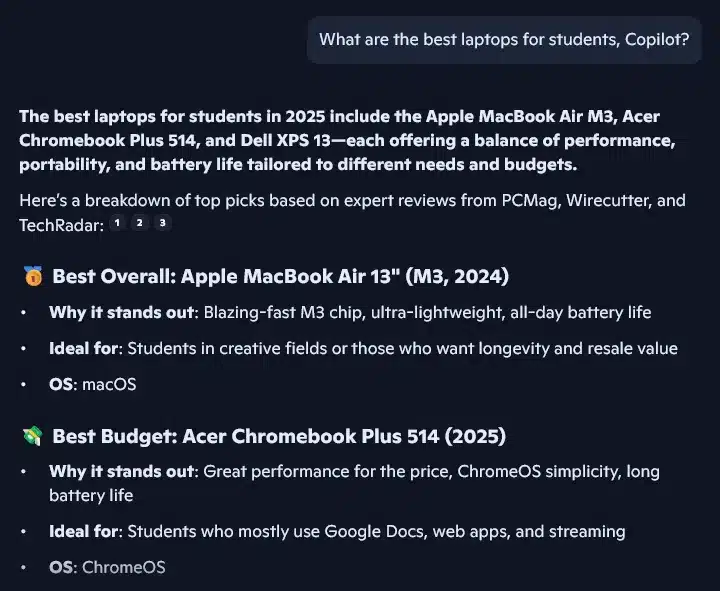
Instead of getting ten blue links, you get one response. This changes the picture for businesses, as they must also factor in Answer Engine Optimization (AEO), not just optimize for search engines.
What Makes AI Search Visibility Important?
With Search Engine Optimization (SEO), success is measured by clicks and traffic. With AI search, the most important metric is AI search visibility. This is your brand’s ability to be mentioned, cited, and positively represented within these AI-generated answers.
The reason this matters comes down to one noteworthy statistic: AI traffic converts at 3x higher rates than traditional channels.
These visitors make decisions before they even click a link. They ask an AI for a recommendation, the AI gives them an answer, and they go directly to the brand that was recommended.
If your brand isn’t in that answer, it is absent at a critical moment of the journey. Traditional analytics, focused on website traffic, will not show you this happened.
Are You Optimizing for SEO or for Visibility?
Before you look at any tool, you must answer one question: What problem are you actually trying to solve?
The current market confusion exists because two very different types of tools are being bundled under the same “AI SEO” umbrella. They solve different problems and can’t be compared directly.
AI-Powered SEO Tools
These tools use artificial intelligence to make the work of traditional SEO faster and more efficient.
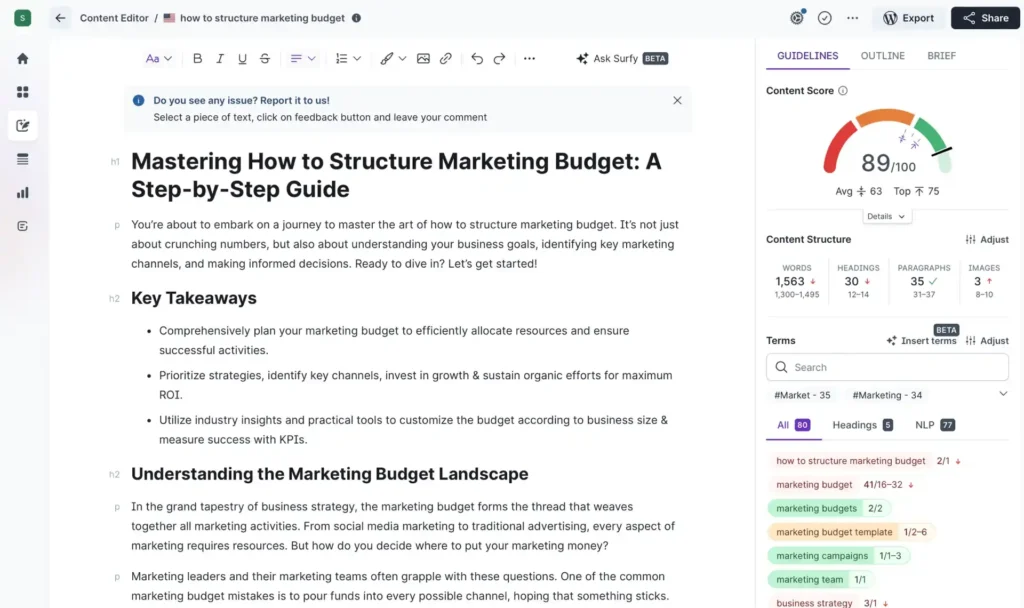
Their job is to help you create content that ranks higher in the traditional blue links on Google. They’re well suited to things like:
Generating blog post drafts and outlines
Analyzing top-ranking content to find topics you should cover
Clustering keywords to build topical authority
Tools like SurferSEO or NeuronWriter fit in this category. They’re an upgrade for the old way of doing things.
AI Search Visibility Platforms
These platforms are built to measure and optimize your brand’s presence inside the answers of generative AI engines.
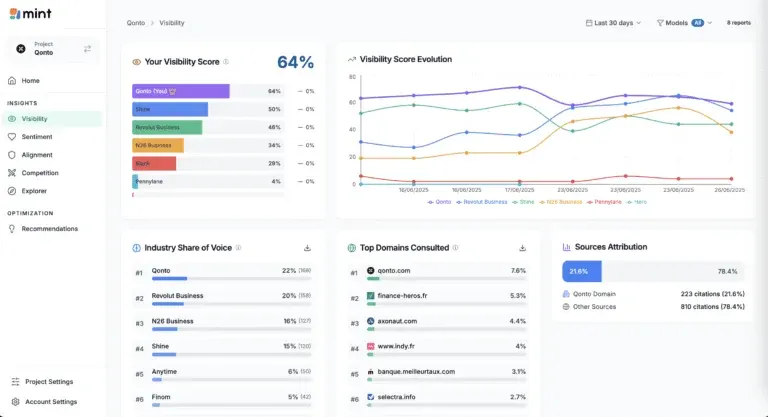
Their goal isn’t to get you on a list of links, but to make your brand the answer. They’re designed to tell you:
If your brand is mentioned in AI recommendations
What your share of voice is for commercial questions
What the sentiment is when an AI describes your products
This is the work of GEO. If your goal is to appear in AI answers, you need a GEO platform. You can see a comparison in our guide to the best tools for GEO.
Is the AI Toolkit in Your SEO Suite Enough, or Do You Need a Dedicated GEO Platform?
It depends on what you need to measure. An AI toolkit added to an SEO suite (Semrush, Ahrefs, Moz or others) extends a familiar model built around rankings, keywords and pages. It can be enough if you only need to track your presence in Google’s AI features. Google’s documentation on AI features explains that AI Overviews follow standard Search eligibility, so classic SEO work covers only part of your AI visibility.
A dedicated GEO platform addresses a different need: measuring your brand’s presence across the answers of several generative engines (ChatGPT, Perplexity, Gemini, Claude, Google AI Overviews), with share of voice, sentiment and the sources AI cites. Academic research treats visibility in generative-engine responses as a distinct measurement problem, where websites appear as inline citations within answers rather than as ranked links.
To decide, ask your current vendor four questions:
Which answer engines does the toolkit track beyond Google?
Does it measure share of voice and sentiment against your competitors?
Does it show the sources AI cites when answering your commercial questions?
Does it help you decide what content to publish to close a visibility gap?
If the answer is yes across the board, your suite’s toolkit may be enough. If not, a dedicated platform fills what’s missing. The rest of the article focuses on AI search visibility platforms, not AI-powered SEO tools.
7 Criteria to Compare AI Search Optimization Tools
Once you know you’re shopping for a visibility platform, the sales pitches can still be confusing. They all promise to track your “AI visibility,” but what does that actually mean? Use these 7 criteria to evaluate which tool is built for AI search optimization.
1. Is the tool built for SEO or GEO?
A tool with a traditional SEO philosophy will see the world through the lens of keywords and backlinks. A tool with a GEO philosophy understands that AI search is about entities, authority, and brand reputation across the entire web.
GEO-native tools are built on the understanding that you need a strategy for how to optimize for AI search, which involves managing your presence on authoritative third-party sites, not just your own blogs.
→ This is important because many traditional SEO tools, such as Semrush, Ahrefs, and Moz, are integrating AI features without yet optimizing for generative engine behaviors like citation targeting or large language model (LLM) prompt shaping.
The case for citation-level insight is backed by research: the GEO study on generative engine optimization found that adding citations, relevant quotations, and statistics increased source visibility by up to 40% across the queries studied, which is why a GEO platform should show you which sources and citations shape AI answers, not just whether your pages rank.
2. How many platforms does the tool cover?
Tracking Google’s AI Overviews is important, but it’s only one piece of the puzzle.
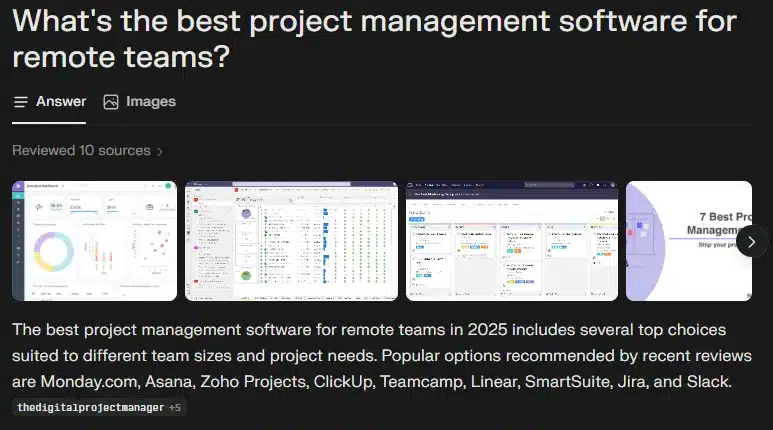
High-intent, commercial questions are being asked every second on platforms like ChatGPT and Perplexity. A tool that only tracks Google, like Morningscore’s AI Overviews Tracker, does not show what happens where your customers are making purchase decisions.
3. Does the tool measure what matters?
Getting an alert that you received an AI mention isn’t enough. That’s a data point, not an insight.
A strategic platform measures what influences customer perception and business outcomes. Beyond AI mentions, look for tools that track these KPIs:
Share of voice: What percentage of the AI answers for your most important keywords do you own compared to your competitors?
Sentiment: When the AI mentions your brand, is the description positive, neutral, or negative?
Brand alignment: Does the AI’s description of your company match your actual brand messaging?
Citation quality: When the tool provides an AI citation, are the sources high-quality and authoritative?
4. Does the tool give you a dashboard or a strategy?
A dashboard full of charts is useless if it doesn’t tell you what to do next. The platform should move you from data to decision: it shouldn’t just show that a competitor is winning a mention, but help you understand why by showing the sources AI is using.
This allows you to identify specific content gaps and build a plan to earn that visibility.
→ GetMint, for example, presents the sources behind AI citations and includes a Content Studio to produce content that closes the gap.
5. How easily can your team adopt the tool?
The most powerful tool is worthless if it’s too complex for your team to use.
The insights must be easily accessible to the people who need them (brand managers, content strategists, and marketing leaders) without requiring a data science degree to understand. Prioritize tools with minimal onboarding and functional interfaces.
6. Does the tool fit your existing stack?
A visibility platform shouldn’t be a data island. You need to be able to get the insights out of the tool and into the systems your organization already uses for reporting and analysis, whether that’s a simple spreadsheet, a Google Looker Studio dashboard, or an internal business intelligence tool.
Many enterprise-level traditional SEO platforms have begun introducing GEO features to become an all-in-one solution. Meanwhile, dedicated GEO platforms, such as GetMint, integrate with tools such as Google Search Console and Slack to fit into your workflow.
7. What is the tool’s total cost of ownership?
Evaluate the total cost of ownership, not just the sticker price. A cheap tool that only tracks Google AIOs and leaves out the rest of the AI ecosystem can cost more in the long run because of the missed opportunities.
Be wary of pricing models that charge extra for essential features like adding team members, exporting your own data, or accessing support.
Also make sure the product fits your team’s workflow and your company’s budget. Some platforms (like seoClarity, which starts at $2,500/month) are built for enterprise-scale operations. If you’re a lean team focused on actionable GEO insights, that level of complexity may be overkill and inflate your spending.
Common Mistakes to Avoid
Before you make your final decision, be aware of these common traps. They’re frequent reasons businesses end up with an expensive tool that doesn’t deliver expected value.
1. Focusing on features instead of effectiveness
The biggest mistake is getting dazzled by a long list of features. Many vendors showcase AI-powered content writers or keyword generators. These features are designed to improve traditional SEO, not measure AI search visibility.
2. Underestimating the total cost of ownership
Don’t just look at the monthly subscription fee. A tool that seems cheap upfront can become expensive quickly if there are strict limits on the number of users, tracked keywords, or data exports.
Many tools force you to “upgrade” or “buy credits” to add new team members or do more keyword research. Always ask about these hidden costs and prioritize platforms with transparent, all-inclusive pricing.
3. Buying a tool without a strategy
An AI search visibility platform is a compass: it tells you where you are and which direction you need to go. The most powerful tool won’t deliver an ROI without a strategy for using its insights.
Before you buy, have a clear plan for who on your team will own the data and how you’ll use it to guide your content creation and authority-building efforts.
Final Thoughts: How to Choose with Confidence
Choosing the right AI search optimization tool comes down to clarity. Don’t get lost comparing feature lists; the right choice is about finding a tool whose approach fits this new era of search.
First, be clear about the problem you need to solve: do you need a tool to make your traditional SEO work more efficient, or a platform to measure and manage your brand’s visibility inside AI answers? If your SEO suite’s AI toolkit covers your needs (engines tracked, share of voice, sentiment, cited sources), it may be enough; if not, a dedicated GEO platform is the logical complement.
Once you’re focused on a GEO platform, use the 7-point framework to guide your evaluation: a GEO-based approach, coverage across the major AI engines, and the depth of metrics needed to measure what actually matters.
BUILT FOR ENTERPRISE BRANDS
Your competitors are already visible in AI. Are you?
See what ChatGPT, Gemini and Perplexity say about your brand. Set up in 5 minutes.

